Concern
Disconnected systems
Every gap between systems is a place for the service to break down. Having the reservation, the order, and the payment in one place closes those gaps entirely.
The cost
The work is in the gaps between tools.
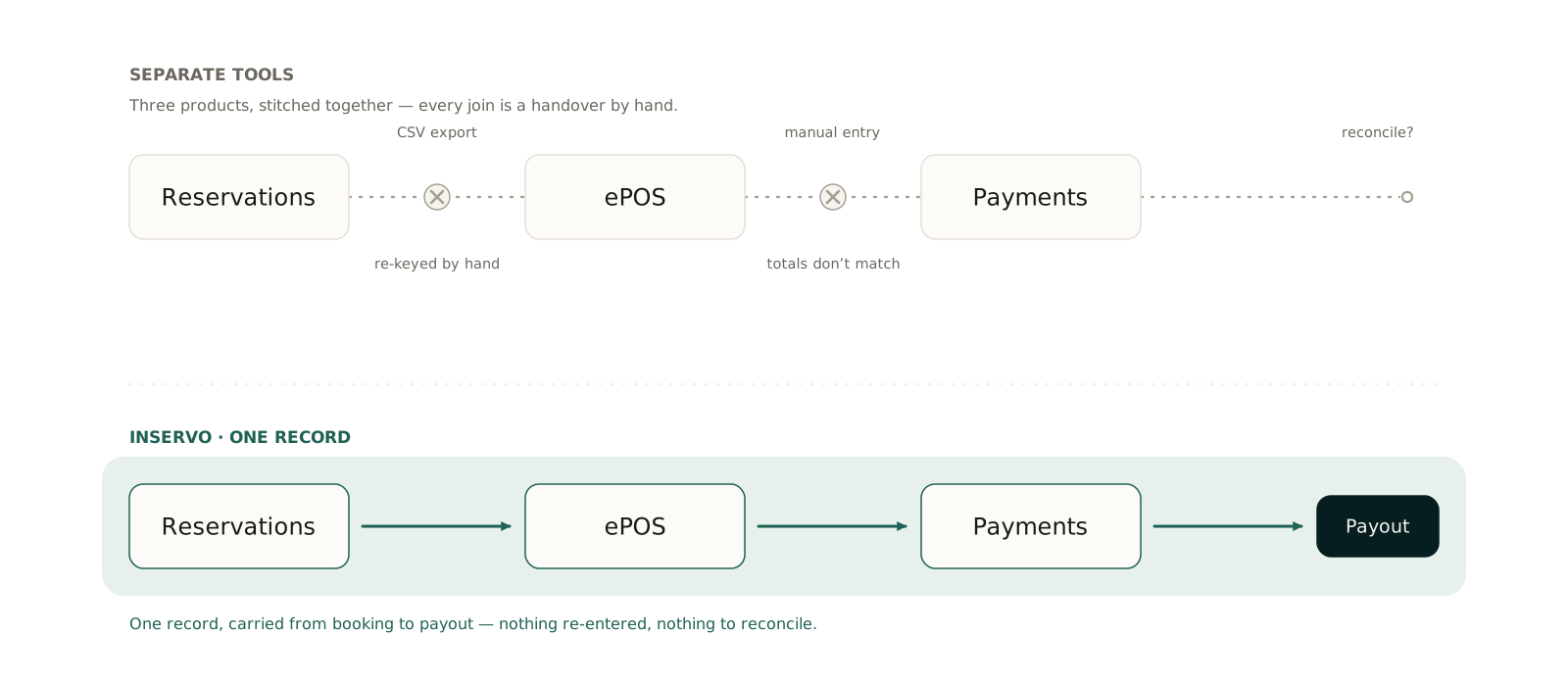
A booking in one place, the till in another, payments in a third — each export, each re-key, and each mismatch is time taken from the floor and a number that has to be checked twice.
How the system addresses it
One record, with no integrations to maintain.
One record
Booking, order, and payment held together, not exported between tools.
No double entry
The guest and the bill are entered once.
No reconciliation by hand
Figures agree because they were never separated.
One floor view
The room reads the same picture as the till and payments.
One payout
All transactions settle into a single, reconciled payout.
One vendor
One system to run and to call, billed monthly.
Inservo does not connect the tools. It replaces the need for them.
Questions
Disconnected systems, answered.
Why do separate restaurant systems cause problems?
Separate reservations, till, and payment systems force exports, re-keying, and reconciliation between tools, and each handover is a place for errors and lost time. Inservo holds the reservation, the order, and the payment on one record, so there is no integration to maintain between them.
Does one system mean one vendor to deal with?
Yes. Reservations, ePOS, and payments are one system on one subscription, so there is one place to run service and one place to call.
Is data re-entered between booking, till, and payment?
No. The booking becomes the order and the payment on the same record, so the guest and the bill are entered once.
Further reading
Further reading
Published guides from Inservo on the same subject.
73% of diners are happy to book with AI. Only 24% of restaurants let them
73% of consumers are happy to book with AI, yet only 24% of restaurants use it — adopters report 33% efficiency gains (industry research, 2025).
Guest behaviourHuman service or self-service? UK diners want both — here's the split
68% of UK diners prefer human interaction, but nearly half of under-35s prefer self-service. Why hybrid service models are winning.
OperationsRestaurant staffing: vacancies are still 48% above pre-pandemic levels
Hospitality vacancies remain 48% above pre-pandemic levels — 132,000 unfilled roles — and 30% of new hires leave within three months (industry research, 2025).
Stop patching the gaps between tools.
A short walkthrough of one record from the booking to the payout.